
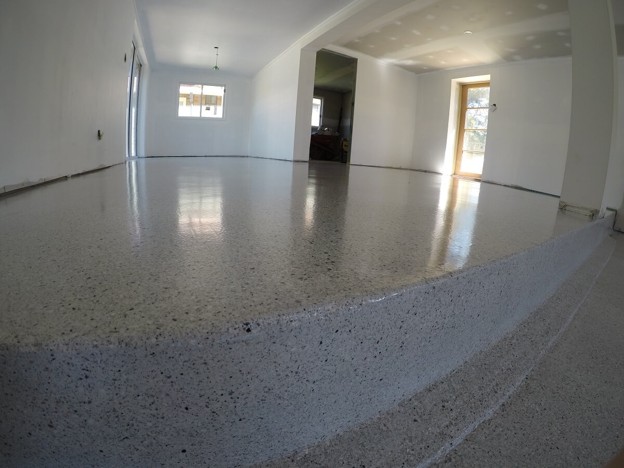
Fixing damaged slab foundations needs careful attention before applying top decorative coatings. Property owners planning a thorough concrete repair project must inspect every single surface crack first. Deep structural fissures need chasing out using angle grinders fitted with sharp diamond blades. You want clean open channels that let liquid polymer compounds bond securely inside stone pores. Removing loose debris using high-powered industrial vacuum units keeps fine dust out. Skipping proper vacuuming steps causes repair fillers to pop loose after heavy traffic hits.
Key Steps In Floor Prep
Thorough surface grinding removes old paint coats along with deep oil stains efficiently. Managing proper floor preparation work requires heavy-duty planetary grinding machinery running slowly across slabs. The rotating diamond segments strip away top concrete laitance to reveal solid aggregate underneath. Opening up concrete pores allows new floor primers to sink deep into raw stone. You should always check for hidden moisture vapour escaping from underneath the foundation slab. High moisture levels push liquid coatings upward, causing nasty surface bubbles later on.
Filling Cracks And Holes Cleanly
Dents and pitting across concrete surfaces require fast-setting epoxy patch mortars. Anyone executing a concrete repair job needs to mix two-part resin formulas thoroughly. Spreading thick patch material into damaged spots using flat steel trowels levels everything nicely. You need to feather the edges out smooth so patches blend with surrounding concrete. Allowing patch materials to cure completely prevents soft spots from forming under new coats. Sanding cured patches flush creates a smooth base for subsequent protective liquid floor layers.
Testing Slab Moisture Levels Properly
Checking moisture emissions prevents premature floor coating failures across large concrete spaces. Executing smart floor preparation includes setting up calcium chloride test kits directly on stone. Leaving test kits untouched for seventy-two hours provides accurate water vapour readings. Slabs showing high moisture vapour emission rates require deep-penetrating vapour barrier primers. Applying barrier coatings locks moisture down inside concrete pores before liquid topcoats go on. Ignoring moisture testing risks severe delamination issues during hot summer months down the road.
Choosing Diamond Grinding Equipment Segments
Selecting the correct diamond segment hardness depends directly on your concrete slab strength. Soft concrete requires hard bond diamond segments to avoid wearing tools out instantly. Hard concrete slabs need soft bond diamonds that constantly expose sharp new cutting edges. Proper concrete repair contractors match tooling hardness to specific slab conditions on site. Running heavy grinding machinery over uneven joints levels out high spots across room floors. Vacuum attachments must remain connected constantly to collect toxic silica dust off the floor.
Applying Epoxy Primer Coats Uniformly
Rolling liquid epoxy primers over freshly prepped stone ensures maximum coating adhesion. Skilled workers performing floor preparation pour mixed primer in long ribbons across bare concrete. Squeegees spread the liquid evenly before a heavy roller covers back to roll the surface smooth. Penetrating primers soak deep into microscopic pores, forming a permanent mechanical anchor lock. Letting primers tack up before applying intermediate coats prevents unwanted pinhole formation throughout. Maintaining clean workspaces prevents loose dirt particles from settling into wet primer layers overnight.
Managing Joint Expansion Filler Installation
Cutting expansion joints allows concrete slabs to expand and contract without cracking randomly. Professional concrete repair crews clean out control joint channels using wire wheel brushes. Flexible polyurea joint fillers absorb floor movement while supporting heavy vehicle wheels crossing over. Filling joints flush with the surrounding floor surface stops dirt from collecting in deep grooves. Scrape off excess cured joint material using sharp floor scraper blades for flat transitions. Smooth floor joints prevent small wheels on equipment carts from catching and causing damage.
Conclusion
Proper slab restoration creates strong bases necessary for long-lasting protective resin coatings. Visiting epoxyflooringredlands.com connects you with experienced technicians who handle concrete prep projects professionally. Removing damaged concrete, filling cracks, and grinding surfaces smooth ensures new floor coatings bond correctly. Following precise prep steps prevents early coating peeling, surface bubbling, and expensive repair work later on. Clean, well-prepared floors handle heavy machinery, foot traffic, and chemical spills without wearing down quickly. Reach out to our expert team today to discuss your upcoming floor prep requirements.

